

Key Takeaways: Anterior pelvic tilt exercises work best when they build strength, control, and awareness rather than just stretching what feels tight, since most anterior tilts linked to pain are a control problem more than a flexibility one. A combination of targeted exercises like the segmental hip lift, banded hip flexor march, and dead bug with an isometric hold, done consistently for a few weeks, paired with regular movement breaks and posture awareness throughout the day, usually makes the biggest difference. If it’s paired with ongoing pain or isn’t changing after consistent effort, that’s the sign to get it professionally assessed.
If you were to search anterior pelvic tilt exercises, you’ll find a hundred articles with nearly identical lists telling you to stretch your hip flexors and strengthen your glutes.
This advice isn’t “wrong,” but it’s also not complete. This is why some people will stretch and strengthen for months without noticing any change to how their hips, lower back, and pelvis feel.
In this article, I’m going to break down what most of these articles are missing and what approach will actually find you long term relief of any discomfort you may be experiencing related to an anterior pelvic tilt.
What Anterior Pelvic Tilt Actually Is
An anterior pelvic tilt is when your pelvis tips forward, so the front of your pelvis drops and the back rises. For most people this is not inherently a problem. In fact, our natural spinal anatomy has some degree of an anterior pelvic tilt. Plenty of people walk around with a normal, or even what’s considered “excessive,” degree of anterior tilt and never think twice about it.
It becomes worth addressing when it’s paired with things like low back pain, hip pain during squats or lifting, or a posture that just doesn’t feel like it’s under your control anymore.
This difference is important to mention, because it changes the goal. You’re not trying to reverse or “correct” your anterior pelvic tilt. You’re trying to build enough strength, control, and awareness of where your body is in space that your body can more easily move in and out of the anterior pelvic tilt position and not feel “stuck” there all day.
Why Stretching Alone Usually Isn’t Enough
Most anterior pelvic tilts that are also associated with pain or discomfort are a strength and control problem. Not just a flexibility or tightness problem. The hip flexors and low back erectors are often tight because they’re doing more work than they should, not because they’re inherently short or need to be stretched. That’s mainly because the muscles in the hips, lower back, and pelvis, like the glutes, hamstrings, and deep core, are frequently underused and not pulling their share of the load.
Without also building strength, awareness, and control in these areas, stretching only gets you so far and you feel like you’re fighting the same battle every day. The tight muscles loosen up for an hour, then tighten right back up because nothing has changed about how your pelvis is being controlled the rest of the time. A real fix addresses both sides at once.
Exercises to Address an Anterior Pelvic Tilt
Below are 3 exercises that help address some of the topics described above. I recommend giving each one a try a few times a week for at least 4 weeks. Each exercise name below is linked to a video demo.
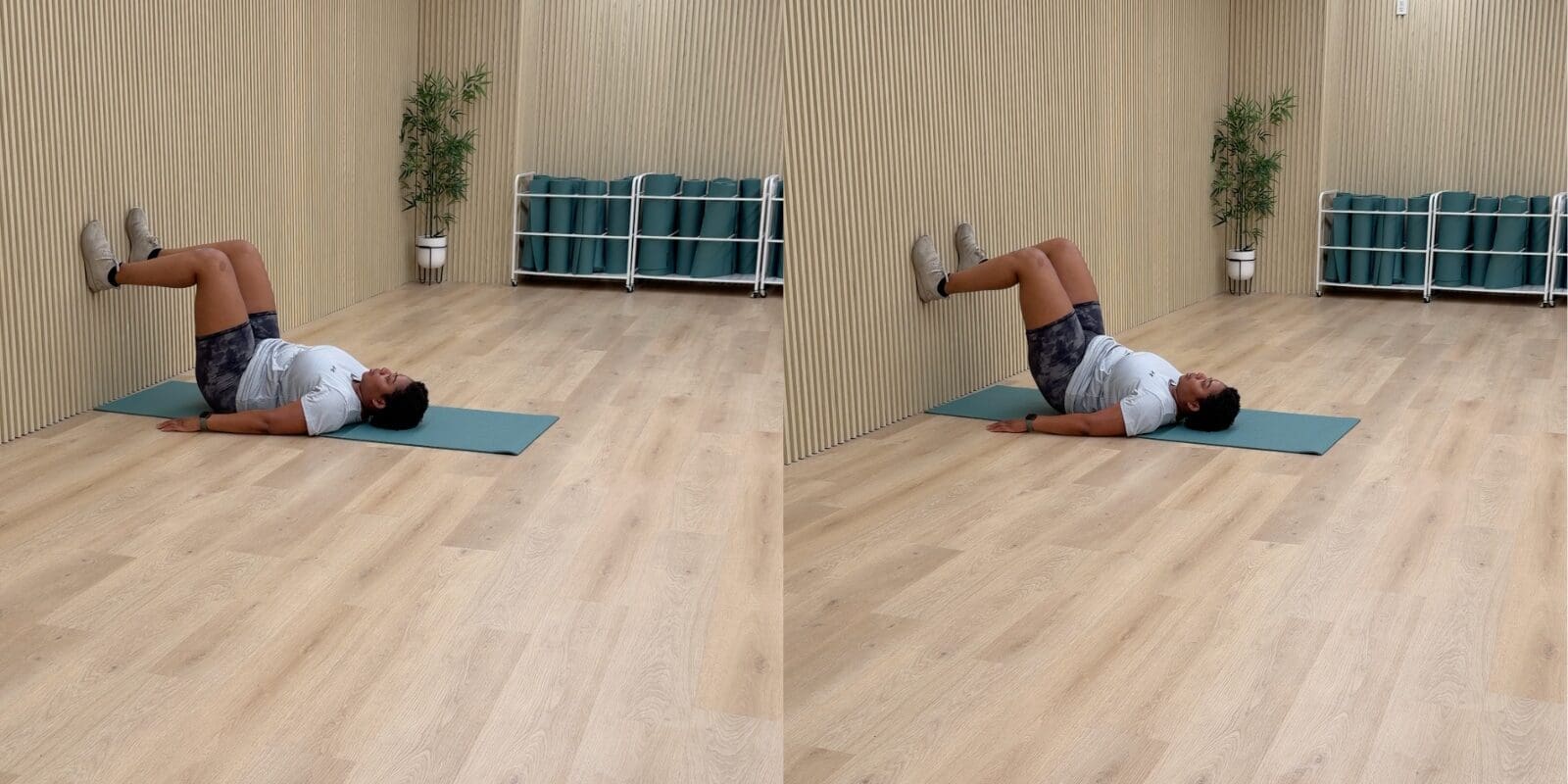
Segmental Hip Lift on Wall: Lay flat on your back with your knees and hips at 90 degrees and your feet supported on the wall in front of you. Flatten your low back against the floor, removing any space between your lower back and the floor. Segment by segment, think about using your glutes and hamstrings (driving your feet slightly into the wall) to lift your hips off the ground.
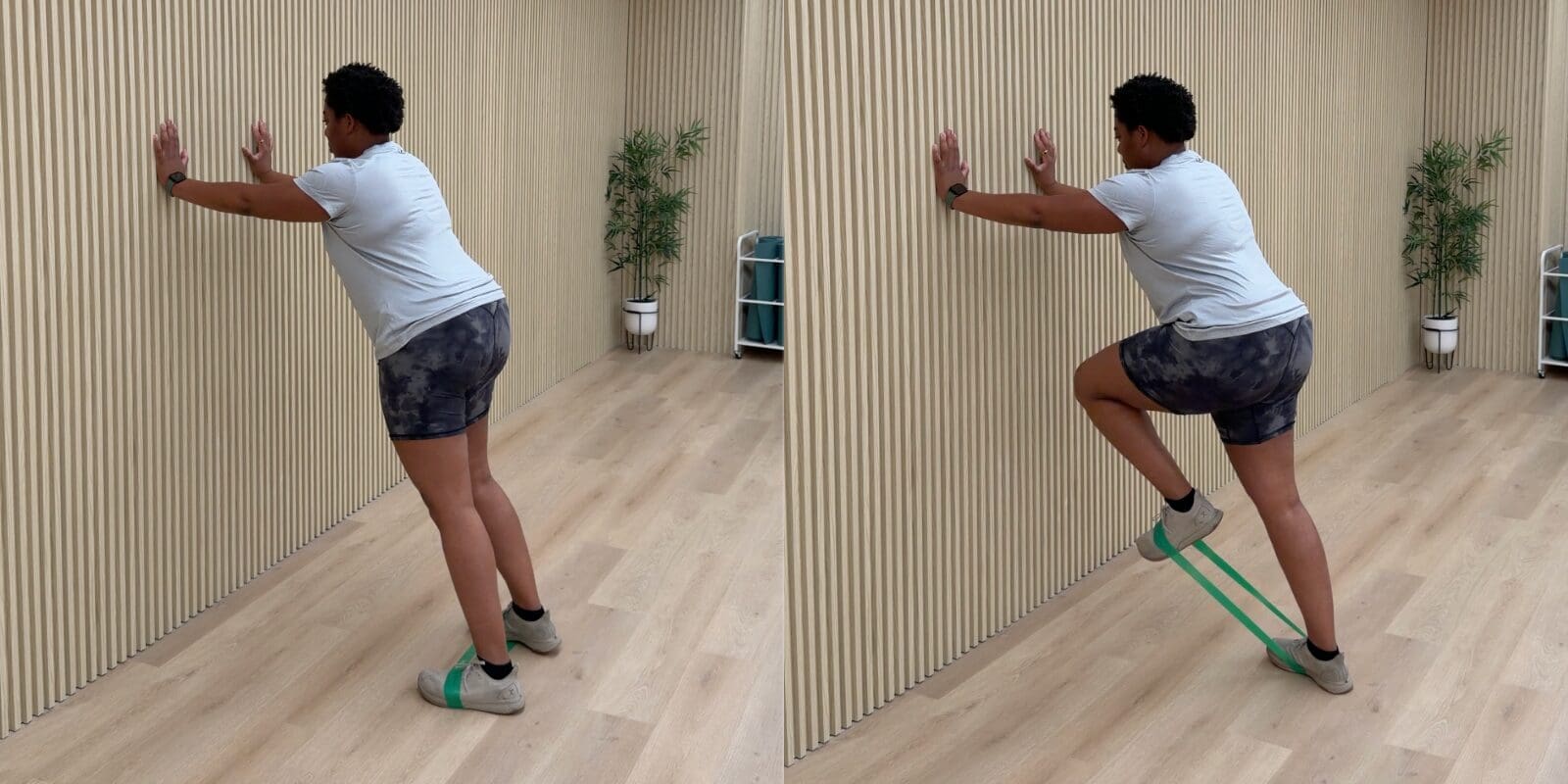
Banded Hip Flexor March at Wall: Stand about a foot or two away from the wall with your arms supported on the wall in front of you. Your body will lean slightly forward toward the wall. Maintain a neutral spine and activation in your deep core muscles. March each foot upward and return to the starting position, alternating feet. Add a band for more of a challenge.
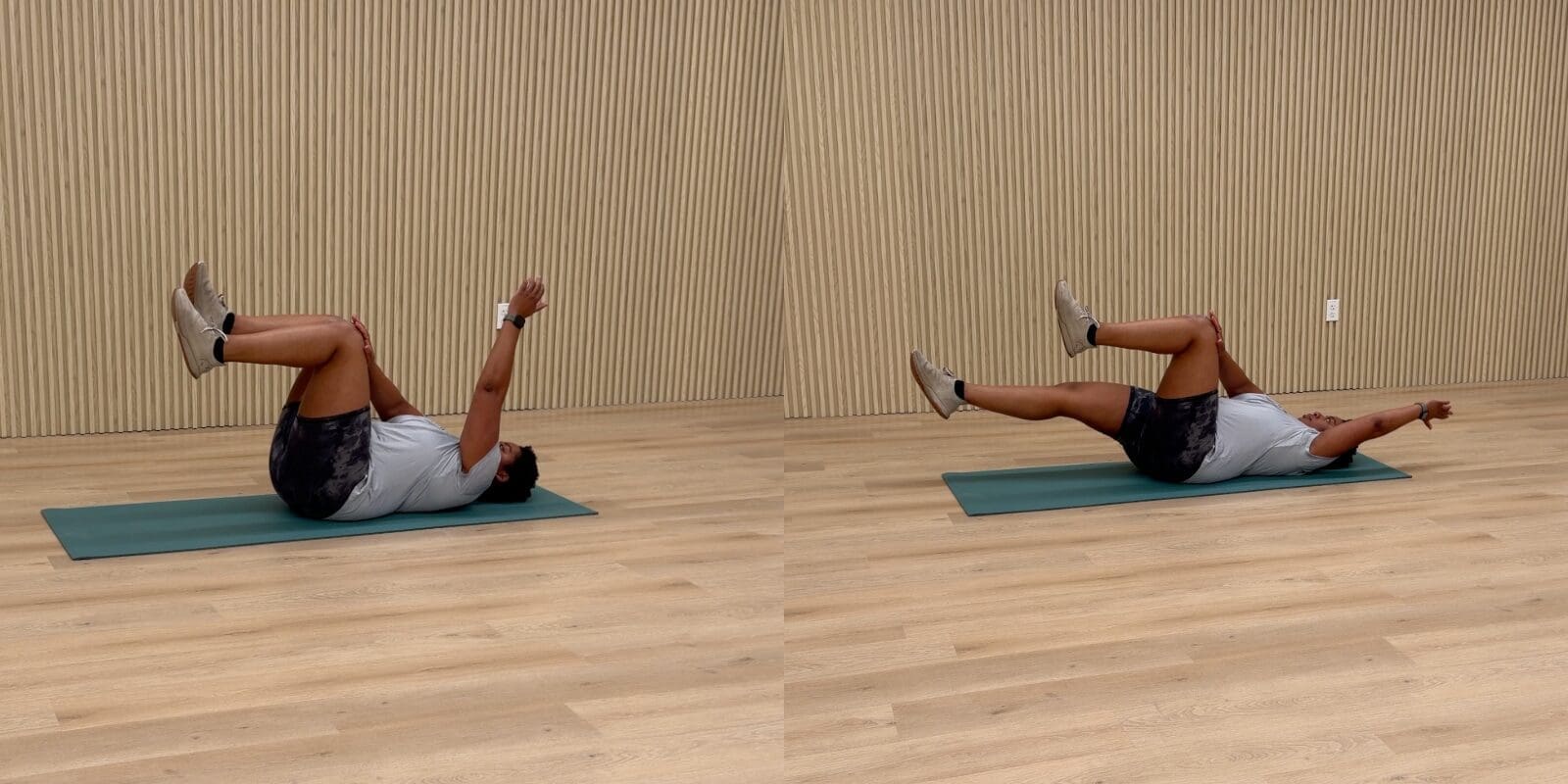
Deadbug with Opposite Isometric Hold: Bring your opposite knee and arm into the air. Your leg will be bent to 90 degrees at the hip and knee. With a flat hand, gently press your hand into the distal thigh right above the knee. Maintain this contact as you extend the opposite leg and arm outward.
Postural Habits That Support the Work You’re Doing
The best exercises in the world can’t undo poor movement habits throughout the day. If you sit for long stretches at a desk or even stand in one place for extended periods of time, one of the best things you can do is start taking small 30 second movement breaks throughout your day. I recommend once every 60 to 90 minutes when possible. Changing positions often is also helpful.
Another habit you can start implementing is becoming more aware of your posture or positioning throughout the day. I like to call these posture checks. If you begin to notice you’re standing, sitting, or walking with your hips in an excessively anteriorly tilted position and it’s causing discomfort, try adjusting: activating through your deep core and repositioning your hips/pelvis.
This will likely be challenging to do at first, but the more you practice, become more aware, and stay consistent with the exercises, the easier it will be.
When to Get Your Anterior Pelvic Tilt Looked At
A mild anterior tilt with no pain isn’t something you need to be concerned about. But here’s a few signs your anterior pelvic tilt is worth getting evaluated instead of continuing to self-treat:
- You’ve been consistent with habit adjustments and exercises for several weeks with no real change
- It’s paired with ongoing low back pain, hip pain, or pain during squats or lifting
- You genuinely can’t tell what a neutral pelvis position feels like, even after practicing
- You’ve had a previous back or hip injury that might be part of what’s driving the pattern
Any of those is a good reason to get a real assessment rather than keep guessing at exercises on your own.
How Rise Performance and Physical Therapy in Denver, CO Can Help
At Rise Performance and Physical Therapy in Denver, Colorado, we don’t hand you a generic stretch and strengthen protocol and call it done. We assess how your pelvis, hips, and spine are actually moving together, figure out which muscles are genuinely tight versus overworked, and test your strength and control through the positions that matter for what you’re trying to do, whether that’s squatting, running, or just getting through your day without low back pain.
Ready to figure out what’s actually driving your tilt? Request an Appointment, available in person in Denver or Wheat Ridge, or virtually through Virtual Rehab Coaching if you’re not local.
Next on Your Reading List

